

What Microscope Magnification Should I Start With?
Sep 4th 2019
What Objective Magnification Should I Start With?
An important point to understand when working with compound microscopes and their objective lenses is that the field of view changes as the magnification changes. Typically a lower magnification objective lens will have a larger field of view, and a higher magnification objective lens will have a smaller field of view. For more information on how m
…
Types of Microscopes
Jul 14th 2019
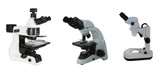
What are the Different Microscope Types and Their Uses?
There are a number of different types of microscopes and each of them solves unique problems. Below you will find information on the five different microscope types along with the applications for each microscope and just who might use each instrument. Below each description of the microscope and its use is an image that was captured using th
…
Using a C-Mount Adapter to Increase Digital Measuring Capability
Jul 1st 2019
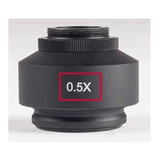
Simplify Small Particle Measurement Using A C-Mount Adapter
It is possible to use a microscope c-mount adapter with no formatting lens in order to increase digital measuring capabilities. As you may have read in some of our other posts, a microscope camera connects to the microscope via a c-mount adapter. The c-mount adapter is specific to the microscope - this means you can not mix and match c-mo
…
Understanding Stereo Microscopes
Jun 30th 2019
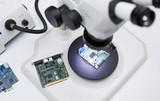
Understanding Stereo Microscopes
Stereo microscopes are commonly used in both professional and amateur environments.
5 Key Stereo Microscope Facts
Stereo microscopes have low magnification.
Stereo microscopes create a 3-D image.
Stereo microscopes do not require sample preparation.
Stereo microscopes do not require use of a bottom (transmitted) light.
Stereo microscopes are use
…


