
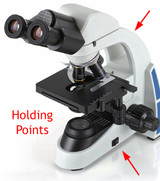
5 Tips to Properly Care for Your Microscope
Jun 16th 2019
Microscope Care & Handling
Following several tips to properly care for your microscope will help ensure that your microscope lasts for years to come. When carrying your microscope from one location to another, do not pick it up by holding the stage, the eyepieces, or any other small parts on the microscope such as the objective lenses or nosepiece. Place one hand on the bottom of the microscop
…
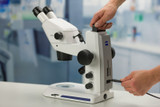
How Do I Use a Microscope
Jun 9th 2019
By following a few safety precautions and taking care when using your microscope, it should last for many years. This article covers handling the microscope, cleaning the microscope, safe electrical use of the microscope and operating the microscope safely.
Learn How to Use a Microscope
There are a few tips to follow for safely using a microscope.
When using microscope slides, be sure to
…
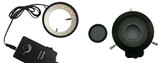
LED Ring Light versus Polarizing LED Ring Light
Jun 3rd 2019
In microscopy when using a stereo microscope it is common to use a LED ring light for illumination. You may have noticed that LED ring lights are available with polarization. What exactly is a polarizing LED ring light and why would you want one?
What is a Polarizing LED Ring Light?
A polarizing LED ring light is used to reduce glare on metallic samples. The polarized LED ring light has both an a
…

Tartaric Acid under the Microscope
Apr 9th 2019
This image of tartaric acid was captured by Harald K. Andersen in Steinberg, Norway. Andersen used a polarizing microscope with a wave plate. The microscope setup had a Nikon 10x objective lens and a 2x photo converter, which ultimately provided a total of 20x magnification on the camera sensor.
Tartaric acid is a white, crystalline organic acid that occurs naturally in many fruits, but especially
…


