
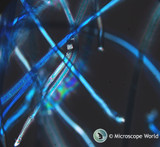
Fiber Analysis under the Microscope
May 9th 2018
The American Association of Textile Chemists and Colorists (AATCC) has developed numerous standards for the performance of test methods related to the textile industry. AATCC Test Method 20 and Test Method 20A are two methods dealing with fiber analysis which require the use of a microscope.
The methods themselves are quite fascinating. Method 20 has all sorts of qualitative procedures to help ide
…

Tips for Optimizing Microscope Illumination
May 3rd 2018
When setting up a compound microscope, it is important to optimize the illumination in order to produce clear and crisp images. There are four areas that should be considered when setting up the microscope illumination.
#1 - Microscope Rheostat The microscope rheostat control can be found on the side of the compound microscope body. It will typically be a knob that is turned clockwise in order to
…
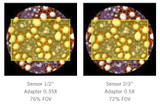
Microscope C-Mount Field of View
Apr 16th 2018
A microscope creates a circular image, as seen through the eyepieces. Microscope digital cameras have a sensor that creates a rectangular shaped imaged. When connecting a microscope camera to the microscope, a c-mount adapter is used. C-Mount adapters are available with different magnifications (1x, 0.65x, 0.5x, 0.35x) and pairing these de-magnifying adapters with camera image sensor sizes (1/3",
…
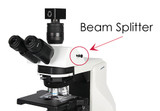
Microscope Beam Splitter
Apr 16th 2018
The microscope beam splitter is found on most trinocular microscopes. The beam splitter controls the light that travels up to the camera on the trinocular port. Depending on the type of work you perform with the microscope, you may want a different type of beam splitter. (Some trinocular microscopes do not have a beam splitter and in that case light is being sent 50% to the eyepieces and 50% to th
…


